
Category: Uncategorized
And as we move away, we can see ourselves turning into memories. We are these memories. As of this moment, we’ll remember each other as we’ll remember a distant world disappearing into a blueness more blue than it used to be.
Mahmoud Darwish, Memory for Forgetfulness: August, Beirut, 1982
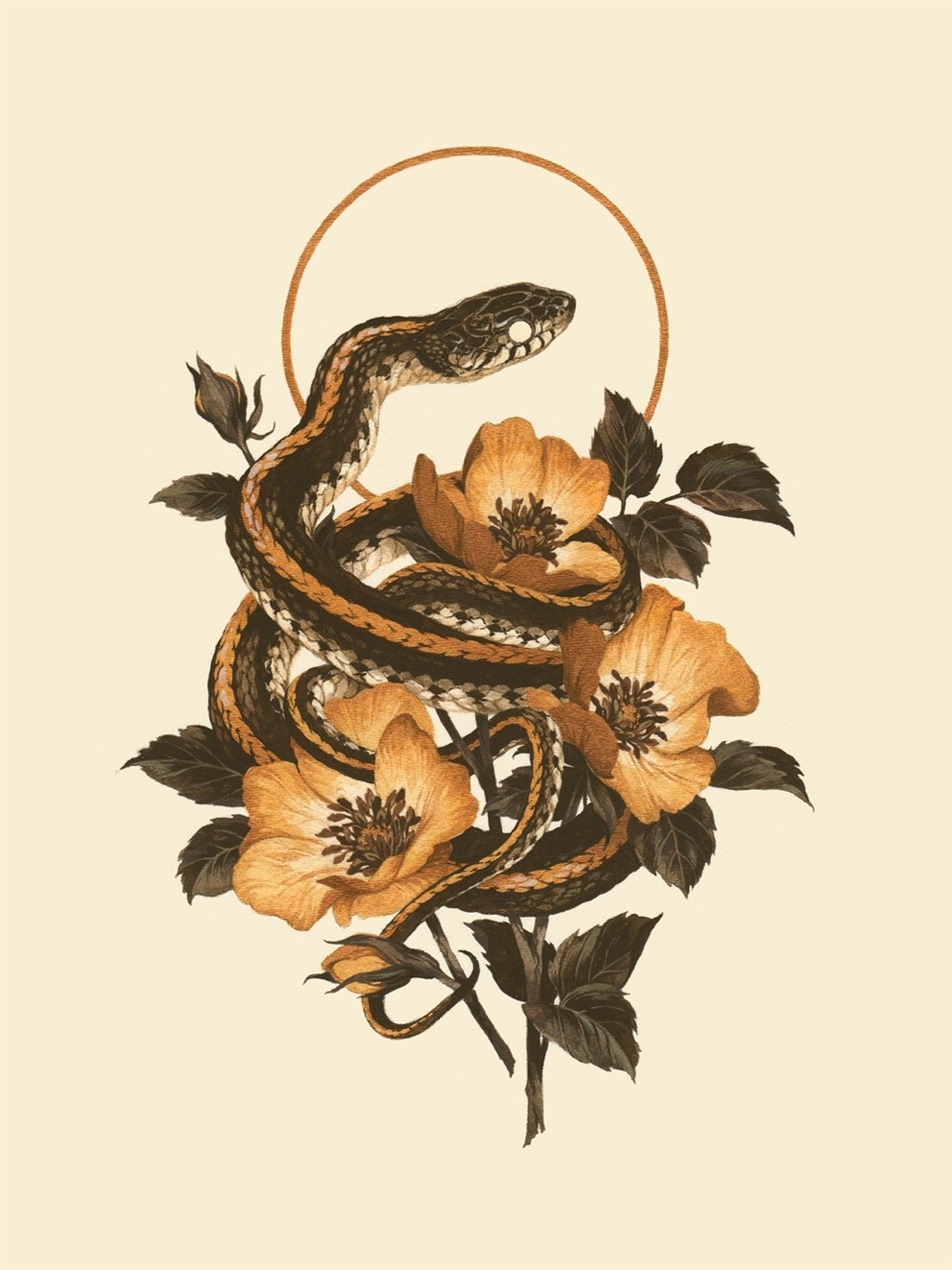
“Coiled & Crushed”, 6"x8", gouache, watercolor, & acrylic on paper.
For Mondo Gallery’s House Party 3 group show.


19th century Tibetan tiger rugs
Of the old Tibetan tiger rugs there are three basic groups. First are
‘flayed’ tiger rugs, pelts with arms, claws and head depicted. Second
were more abstract representations of the tiger stripe design. Third are
tigers walking in pairs, representing Yin and Yang, a Chinese
influence. Among these categories some rug scholarly-types identify
various sub-groups, such as realistic pelts with stylized stripes and
skeleton stripes, pelts with heads at both ends, pelts without heads,
stripes with rainbow ends, abstracted wavy line stripes, lip-shaped
stripes, paired stripes and so on. [Bruce McClaren, The Persian Carpet]Images from Flickr Album by Giovanni Garcia-Fenech
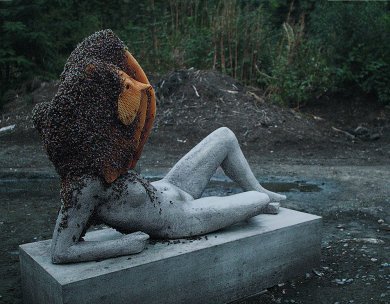
Pierre Huyghe, Untilled (Liegender Frauenakt), 2012. Concrete, beehive and bees.
When bees go full dark souls on you.
the world seems much softer when i think about you
“I’m not lost for I know where I am. But however, where I am may be lost.”
― A.A. Milne, Winnie-the-Pooh

A shocking color palette and incredible composition make the magical creature both intimidating and unsettling.
“We Beckon” by ArtDoge: http://bit.ly/2uaN2EE

 oh god 2.0